Children for Children

What it is
Children for Children is a set of separate programmes that I started in Kadapa in August 2020 and still run.
The first was COVID-19 relief. It raised $120,000 and put food packets in the hands of 1,000 families during the second wave, when the district’s daily-wage economy stopped and households that had been getting by lost their income in a week.
The second, launched in 2021, is a scholarship programme for children orphaned by the pandemic. It has awarded $150,000 to date to 1,090 children. It is still running: I manage the fundraising, the selection and the disbursement.
Those are two different numbers doing two different jobs, and they are often read as one figure that does not add up.
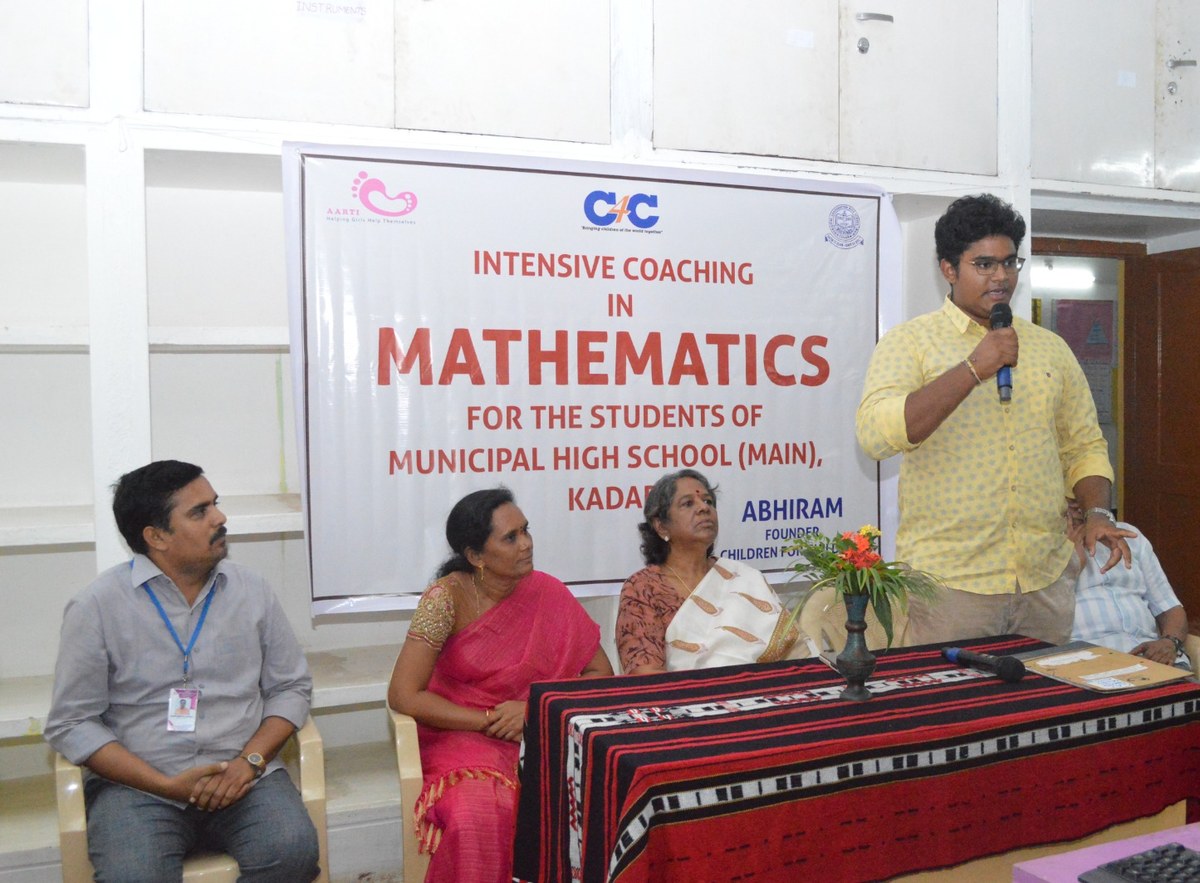
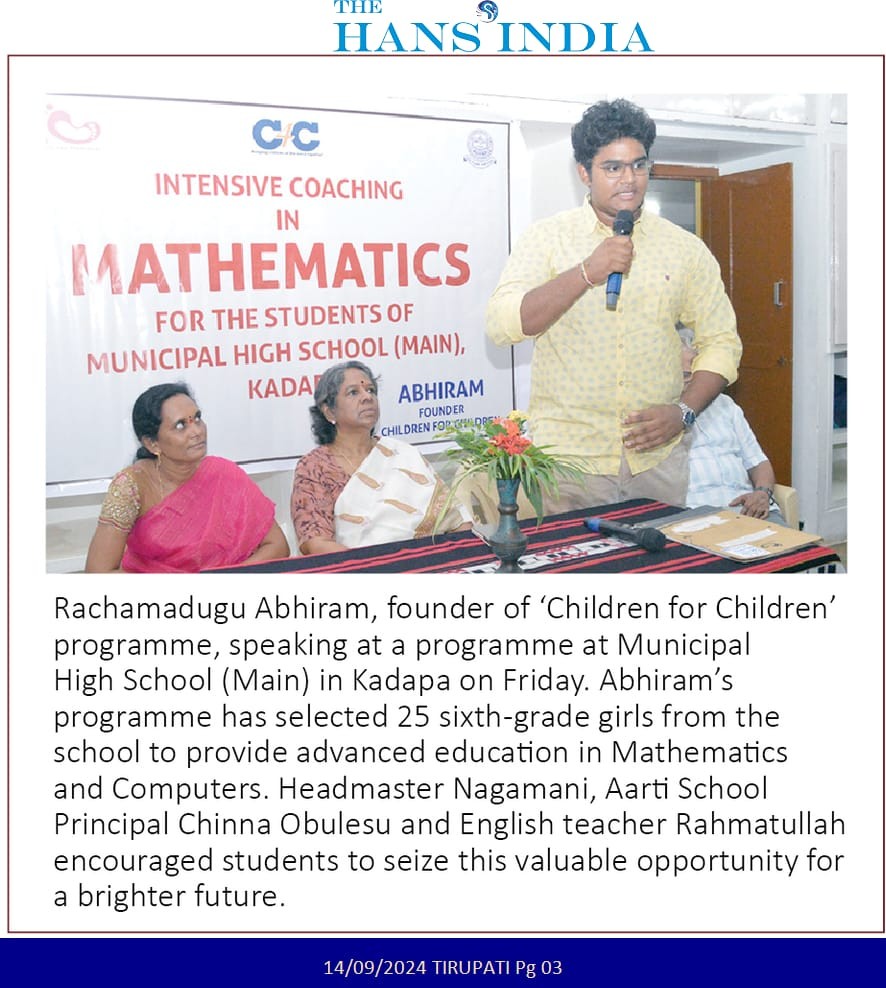
The third strand is teaching. In September 2024 the programme selected twenty-five sixth-grade girls from Municipal High School (Main) in Kadapa for intensive coaching in mathematics and computing, run with the school and with Aarti. It was covered by The Hans India that month.
The problem and the constraint
Kadapa district lost more than a thousand breadwinners to the pandemic. What that leaves is a single surviving parent, usually a mother with no independent income, and two or more children whose education is the first thing to be cut. Relief solves the month. It does nothing about the decade.
The constraint was that I was fifteen and in school, and so was everyone I could ask for help. I had no institution behind me, no grant office, no mailing list, and no way to reach a donor who writes six-figure cheques. Whatever the fundraising model was going to be, it had to work out of a network of teenagers.
What I did
The interesting part of this project is not the total. It is the distribution model, and it is the part nobody sees.
Rather than fundraise myself and ask a wider circle each time — which caps out fast, because you exhaust your own network in about two rounds — I recruited other high schoolers to run their own fundraisers among their friends and families and pass the proceeds up into the programme. Each recruit brings a network I do not have access to and cannot exhaust, and each one asks people who already know and trust them, which is the only version of this ask that works. My job stopped being raise money and became recruit and support the people raising it: giving each of them the case for the programme, the numbers, and something concrete to point at afterwards.
That is why the donor base spans India and the United States. It is not because I found international donors; it is because the students I recruited had families on both sides, and the model travels with them.
On the scholarship side, the work is unglamorous and continuous. Selection has to be defensible, disbursement has to reach the child rather than stopping somewhere upstream, and the whole thing has to keep going in years when nobody is thinking about the pandemic any more. That last part is the hard one. Relief fundraising had urgency behind it. A scholarship programme in its fifth year has to be argued for on merit alone, to donors who gave once during an emergency and have moved on.
I also volunteer with Aarti for Girls, the Kadapa NGO whose work the programme grew out of and whose reach on the ground is what makes selection and disbursement possible at all.
Gallery
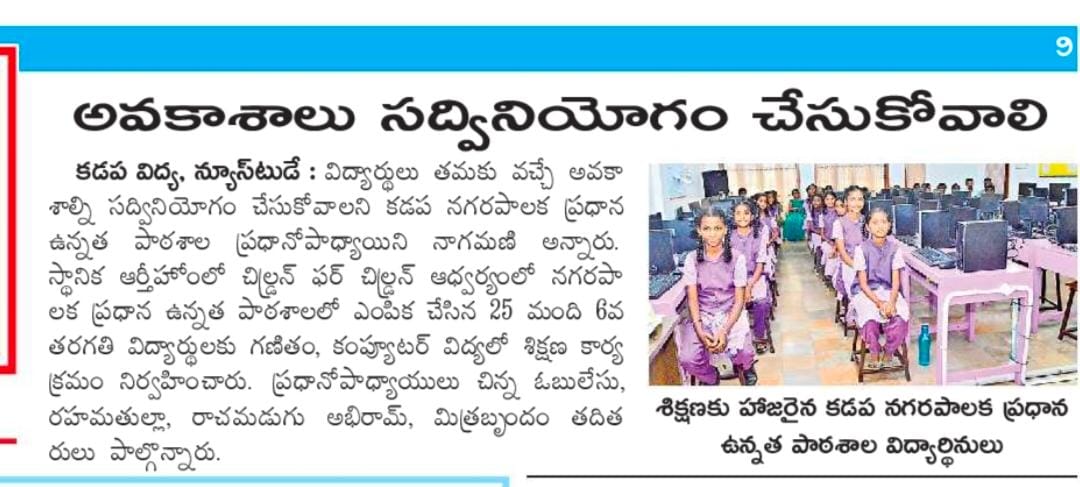
A note on photographs. No child is identifiable in anything on this page. The Telugu report above ran with a picture of the class at their computers, and that picture is pixelated here on purpose: the girls in it are minors, and whatever consent exists was given to a newspaper for one day’s circulation, not to a website that stays up and gets indexed. The scholarship programme has no photographs at all. Everything else here is numbers, and adults who knew they were being photographed.